How to Fertilize Container Vegetables for Bigger Harvests
There’s a special kind of heartbreak in watching a tomato plant grow tall and leafy… only to produce three tiny tomatoes all summer long.
Maybe your peppers stay stubbornly small no matter how much sunshine they get. Maybe your cucumbers burst with energy in spring, then suddenly stall out once midsummer heat settles in. Or maybe your container garden simply looks tired, pale, and exhausted halfway through the growing season.
If that sounds familiar, you are far from alone.
One of the biggest reasons container vegetables struggle is also one of the easiest problems to fix: nutrition.
Unlike traditional in-ground gardens, container vegetables live in a tiny, closed world. Their roots can only access the nutrients inside the pot, and every watering slowly washes those nutrients away. Even the healthiest potting mix eventually becomes depleted as hungry plants grow larger and produce vegetables.
Learning how to properly fertilize container vegetables can completely transform your harvests. Suddenly, tomato vines become heavy with fruit, peppers ripen more abundantly, and cucumbers keep producing deep into summer instead of fading out early.
Container gardens may live in small spaces, but with the right nourishment, they can overflow with abundance.
The good news is that feeding vegetable plants in pots does not have to be complicated. Once you understand what your plants are asking for, creating a healthy fertilizing routine becomes surprisingly simple.
In this guide, we’ll explore the best fertilizer for container vegetables, how often to fertilize container plants, signs your garden may be nutrient deficient, and beginner-friendly ways to keep your harvests thriving all season long.
Why Container Vegetables Need More Fertilizer Than In-Ground Gardens
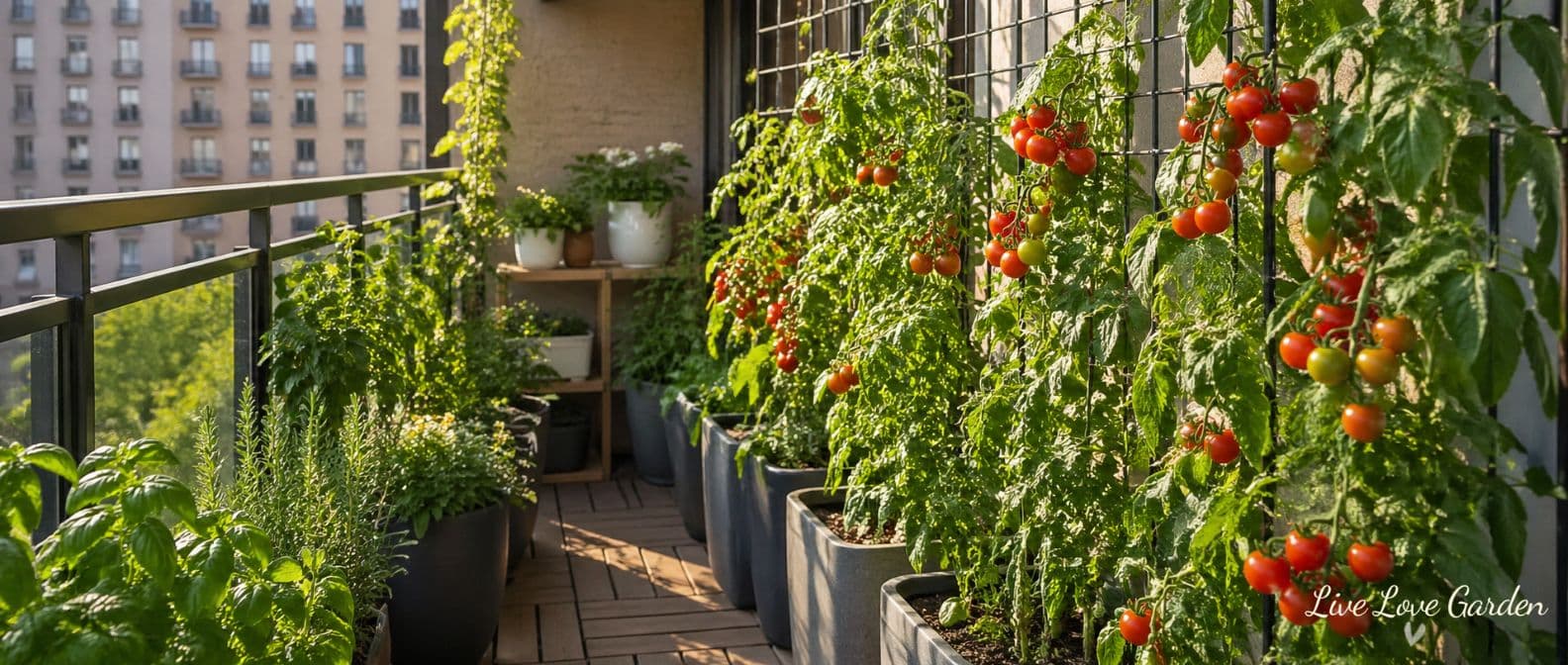
Container gardens are wonderfully flexible. They let us grow food on balconies, patios, tiny backyards, and sunny apartment corners that would otherwise remain empty.
But vegetables grown in containers also face challenges that plants growing in the ground simply do not.
In an in-ground garden, roots can stretch deep into surrounding soil searching for nutrients and moisture. The earth acts like a giant pantry filled with minerals, microbes, organic matter, and slow-release nutrition.
Container vegetables do not have that luxury.
Every tomato, pepper, cucumber, or squash plant growing in a pot is completely dependent on the limited nutrients trapped inside that container.
Why Nutrients Disappear Faster in Containers
- Limited soil volume means fewer stored nutrients
- Frequent watering flushes fertilizer out through drainage holes
- Hot summer temperatures speed up nutrient depletion
- Fast-growing vegetables consume nutrients rapidly
- Roots cannot spread beyond the container searching for more food
This becomes especially noticeable during the peak of summer when plants are growing quickly and temperatures climb higher. A container that seemed rich and healthy in spring can become surprisingly depleted by July.
Heavy-feeding vegetables are usually the first to show signs of stress. Crops like tomatoes, peppers, cucumbers, and squash need consistent nutrition to support flowering and fruit production.
If you’re growing these thirsty summer crops, you may also enjoy our guide to high-yield edible summer crops for urban gardens.
And because watering plays such an important role in nutrient management, self-watering systems can help stabilize moisture and reduce plant stress during extreme heat. You can learn more in our article on building a self-watering container garden.
The key is understanding that container gardens are not “set it and forget it” ecosystems. They need ongoing nourishment throughout the season to continue producing healthy harvests.
Which is better? Fabric Grow bags or Plastic Pots? Read the article to find out!
Signs Your Container Vegetables Need Fertilizer
Vegetable plants are surprisingly expressive once you learn how to read them.
When nutrients begin running low, your garden often sends gentle warning signs long before plants completely fail. Catching these symptoms early can help you correct problems before harvests suffer too much.
Yellowing Leaves
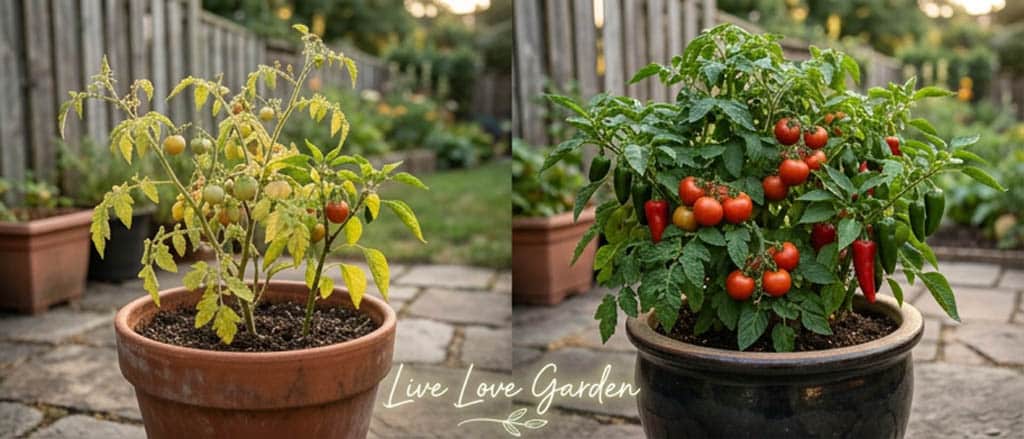
One of the most common signs of nutrient deficiency is yellowing leaves, especially older leaves near the bottom of the plant.
This often points to a lack of nitrogen, which helps support lush green growth and healthy foliage. Since nitrogen is highly water-soluble, it tends to wash out of containers quickly with repeated watering.
Small or Slow-Growing Vegetables
Plants that seem stuck in place often need additional nutrition.
You may notice tiny peppers, undersized cucumbers, slow tomato development, or plants that flower weakly without producing much fruit.
In many cases, the plant is surviving… but not truly thriving.
Lots of Leaves but Few Fruits
Sometimes the opposite problem occurs.
A plant may look huge, green, and bushy while producing very few vegetables. This usually happens when there is too much nitrogen and not enough phosphorus or potassium to support flowering and fruit production.
Tomatoes and peppers are especially sensitive to this imbalance.
Pale or Weak Growth
Container vegetables that appear thin, washed out, floppy, or weak may be struggling with overall nutrient exhaustion.
Since potting mixes break down over time, older containers can gradually lose both nutrition and structure throughout the growing season.
Healthy container gardens should look vibrant, energetic, and actively growing, not merely hanging on through summer.
Blossom End Rot on Tomatoes and Peppers
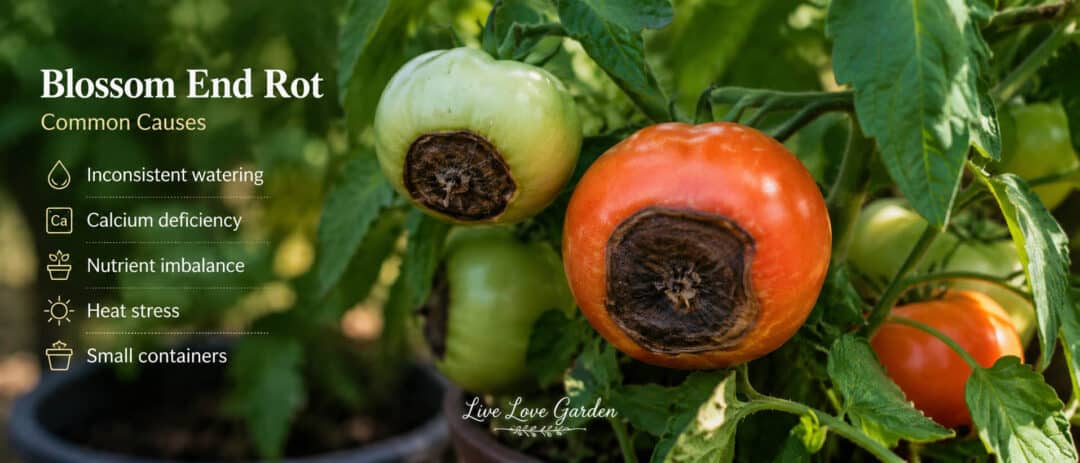
Those dark, sunken spots on the bottoms of tomatoes and peppers can be incredibly frustrating.
Blossom end rot is often connected to calcium uptake problems, which are usually made worse by inconsistent watering and depleted container soil.
While adding calcium can help, maintaining steady moisture is equally important because dry soil prevents roots from properly absorbing nutrients.
If you’ve struggled with tomato issues before, you may also enjoy our guide on using coffee grounds in tomato gardens.
The Best Types of Fertilizer for Container Vegetables
Walking through the fertilizer aisle can feel a bit overwhelming at first. Granules, liquids, powders, organic blends, synthetic formulas… it starts looking less like gardening and more like a chemistry lab designed by raccoons with clipboards.
Thankfully, feeding container vegetables does not need to be complicated.
Most thriving container gardens rely on a combination of slow, steady nutrition and occasional quick boosts during peak growing season.
Organic Granular Fertilizers
Organic granular fertilizers are one of the easiest and most beginner-friendly options for container gardening.
These slow-release fertilizers gradually break down over time, feeding plants steadily instead of overwhelming roots with sudden nutrient spikes.
They are especially helpful for gardeners who want a lower-maintenance fertilizing routine.
Great Organic Granular Fertilizer Ingredients
- Composted poultry manure
- Bone meal
- Feather meal
- Kelp meal
- Alfalfa meal
- Balanced vegetable garden blends
A balanced organic fertilizer often works beautifully for tomatoes, peppers, cucumbers, herbs, and many other edible crops growing in containers.
Liquid Fertilizers
Liquid fertilizers work much faster because nutrients become immediately available to plant roots.
These fertilizers are especially useful during periods of rapid summer growth when container vegetables are producing heavily and using nutrients quickly.
Many gardeners use liquid fertilizer every one to two weeks during peak growing season to keep plants productive.
Popular options include:
- Fish emulsion
- Seaweed fertilizer
- Liquid kelp blends
- Compost tea
- Organic vegetable liquid concentrates
Liquid feeding can be particularly helpful for heavy feeders like tomatoes and cucumbers that rapidly drain nutrients from small containers.
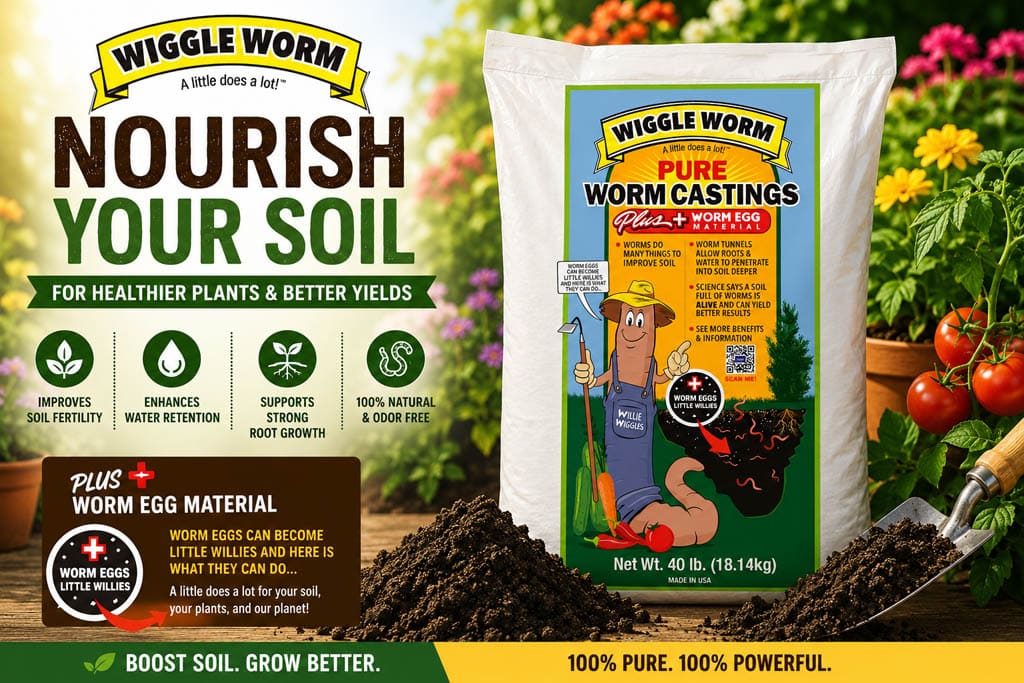
Worm Castings
Worm castings are one of the gentlest and most nurturing ways to enrich container soil.
Unlike harsh synthetic fertilizers, worm castings improve microbial activity while slowly adding nutrients that support long-term soil health.
They also help improve moisture retention and soil texture, which can make a noticeable difference in hot summer containers.
Healthy soil is more than a growing medium. It is a living ecosystem supporting every harvest above it.
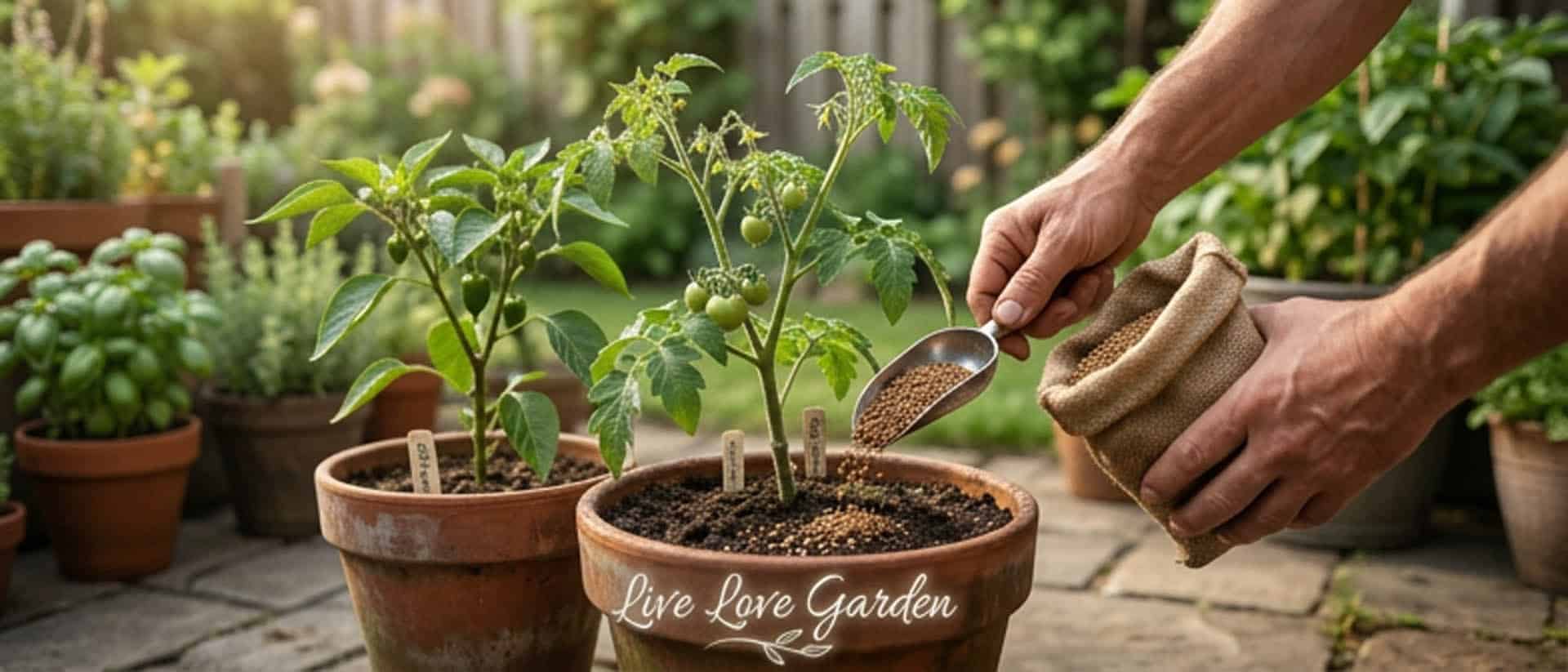
Many gardeners mix worm castings directly into potting soil at planting time or use them as a gentle top dressing throughout the season.
Compost for Containers
Compost is incredibly valuable for container gardens, but it works best as a supplement rather than the only source of nutrition.
It improves soil structure, supports beneficial microbes, and adds slow organic matter back into containers.
However, because containers lose nutrients so quickly, compost alone often cannot fully support heavy-feeding vegetables through an entire growing season.
Combining compost with a balanced container garden fertilizer usually creates much healthier long-term results.
If you want to build richer living soil naturally, our guide to composting at home is a wonderful place to start.
How Often to Fertilize Container Vegetables
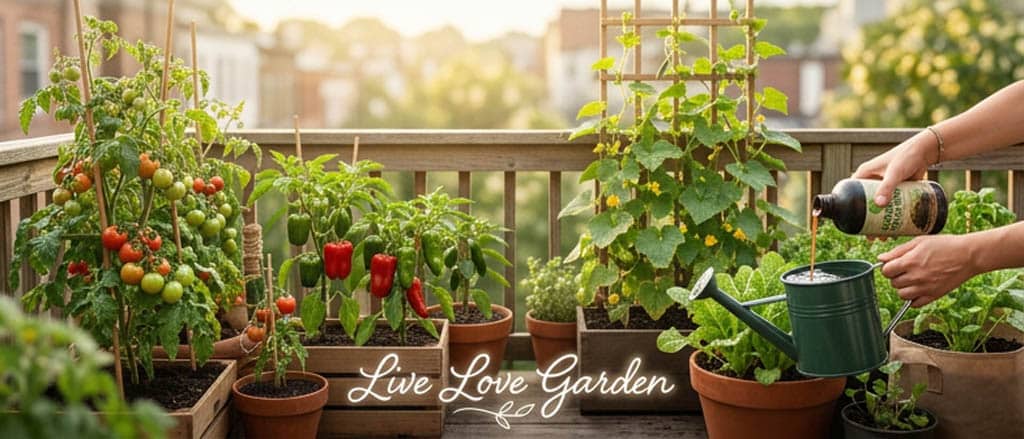
One of the most common questions gardeners ask is how often to fertilize container vegetables, and the honest answer is: it depends on the season, the plant, and how quickly nutrients are washing out of your containers.
A tiny lettuce seedling in spring has very different nutritional needs than a towering tomato plant loaded with ripening fruit in midsummer.
The good news is that once you understand the basic growth stages of your plants, creating a fertilizing routine becomes much easier and far less intimidating.
Simple Beginner Fertilizing Rule
- Add a slow-release fertilizer about once per month
- Use a liquid fertilizer every 1 to 2 weeks during active growth and production
- Increase monitoring during extreme summer heat
- Always water consistently to help nutrients absorb properly
Seedlings
Young seedlings are delicate and do not need heavy feeding right away.
In fact, overfertilizing baby plants can easily burn tender roots and stunt early growth. Most quality seed-starting mixes already contain enough nutrition for the first few weeks.
Once seedlings develop several sets of true leaves, you can begin feeding lightly with a diluted liquid fertilizer or a gentle organic fertilizer for vegetables.
At this stage, less is usually more.
Early Growth Stage
As plants begin developing stronger stems and fuller foliage, their nutrient needs increase significantly.
This is when container vegetables start building the foundation for future harvests. Nitrogen becomes especially important because it supports leafy growth and healthy photosynthesis.
Many gardeners apply a balanced container garden fertilizer during this phase to encourage vigorous early development without overwhelming the plant.
If you are growing vertically, strong early growth is especially important for supporting vines and fruit production later in the season. Our guide to vertical gardening in small spaces shares additional tips for supporting climbing vegetables naturally.
Flowering Stage
Once flowers begin forming, your plants shift from leafy growth into reproduction mode.
This is where many beginner gardeners accidentally create problems by continuing heavy nitrogen feeding. Too much nitrogen during flowering often leads to giant leafy plants with disappointingly small harvests.
During this stage, phosphorus and potassium become increasingly important because they support flowering, fruit set, and overall plant strength.
Fruiting Stage
Once vegetables begin actively forming, container plants become incredibly hungry.
Tomatoes swell rapidly, cucumbers produce almost overnight, and peppers begin pulling large amounts of nutrients from the soil to support ripening fruit.
This is usually when gardeners benefit most from regular liquid feeding every 1 to 2 weeks.
Consistent feeding during fruit production can dramatically improve harvest size, flavor, and plant longevity throughout the hottest months of summer.
Container gardens are constantly balancing water and nutrition. Every deep watering refreshes your plants, but it also slowly rinses nutrients away.
How Summer Heat and Heavy Watering Affect Fertilizer
Summer heat changes everything in container gardening.
During extreme temperatures, containers dry out much faster than in-ground beds. Many gardeners end up watering once or even twice daily during heat waves, especially for sun-loving vegetables on patios or balconies.
Unfortunately, frequent watering also flushes nutrients out through drainage holes much faster.
Heavy rain can create similar problems by leaching nutrients from containers before roots have time to absorb them fully.
This is one reason midsummer gardens often begin looking tired even when watering seems consistent.
Regular feeding becomes especially important during periods of intense heat and rapid growth.
Can You Overfertilize Container Vegetables?
Absolutely.
More fertilizer does not always mean bigger harvests. In fact, overfeeding can damage roots, weaken plants, reduce flowering, and even create salt buildup inside containers.
Common signs of overfertilizing include:
- Crispy brown leaf edges
- Sudden wilting despite moist soil
- Excessive leafy growth with little fruit
- White crust forming on the soil surface
- Burned or damaged roots
Following package directions carefully and feeding consistently rather than heavily usually creates the healthiest long-term results.
If you’ve struggled with plant stress before, you may also find our article on common container gardening mistakes helpful for troubleshooting deeper issues.
Best Fertilizer Schedule for Tomatoes, Peppers, and Cucumbers
Not all vegetables feed the same way.
Some plants are surprisingly light feeders, while others behave like hungry teenagers raiding the refrigerator every two hours during a growth spurt.
Tomatoes, peppers, and cucumbers are among the heaviest-feeding container vegetables, especially once fruit production begins.
Understanding what each plant needs most can help you fertilize more effectively while avoiding common problems like weak flowering, poor fruit production, or nutrient imbalance.
Tomatoes
Tomatoes are vigorous growers that need steady nutrition throughout the season.
Early on, moderate nitrogen helps support healthy stems and foliage. But once flowering begins, tomatoes benefit from increased phosphorus and potassium to encourage strong fruit production.
Calcium is also incredibly important for preventing blossom end rot, one of the most common tomato frustrations in container gardens.
Simple Tomato Feeding Schedule
- Balanced fertilizer at planting time
- Slow-release fertilizer every 4 weeks
- Liquid tomato fertilizer every 1 to 2 weeks once flowering begins
- Consistent watering to support calcium uptake
If you want to maximize harvests in compact spaces, our guide to growing high-yield tomatoes in small spaces shares additional techniques for healthier, more productive plants.
Peppers
Peppers can be a little deceptive because they often grow beautiful green foliage long before they begin producing fruit.
Too much nitrogen is one of the biggest reasons pepper plants become leafy but slow to flower.
Once buds begin forming, peppers benefit from fertilizers higher in phosphorus and potassium to support blossoms, fruit set, and strong pepper development.
Steady feeding combined with warm temperatures usually produces the best harvests.
For even more growing advice, visit our guide to high-yield peppers in containers.
Cucumbers
Cucumbers grow astonishingly fast once summer heat arrives.
Their rapid vine growth and constant fruit production require both steady moisture and reliable nutrition. If either one becomes inconsistent, cucumber plants often decline quickly.
Balanced feeding every couple of weeks during active production helps keep vines healthy and productive much longer into the season.
Because cucumbers contain so much water, moisture consistency plays an enormous role in nutrient absorption and overall plant health.
Healthy cucumber plants grow like summer storms: fast, lush, and suddenly everywhere all at once.
If you are growing cucumbers vertically or in containers, our step-by-step guide to growing cucumbers in small spaces can help you extend your harvests even further.
Common Container Fertilizing Mistakes to Avoid
Even experienced gardeners occasionally run into fertilizing problems, especially during the chaos of midsummer when plants seem to grow faster than we can keep up with them.
The good news is that most container fertilizing mistakes are completely fixable once you know what to look for.
A few small adjustments can often turn struggling plants into thriving, productive harvest machines almost overnight.
Fertilizing Dry Soil
One of the quickest ways to accidentally damage container vegetables is applying fertilizer to completely dry soil.
When roots are dehydrated, fertilizers can become too concentrated and may burn delicate root systems instead of nourishing them.
This is especially common during hot summer afternoons when containers dry out rapidly in direct sunlight.
Moist soil helps roots absorb nutrients safely and reduces the risk of fertilizer shock.
Using Garden Soil in Containers
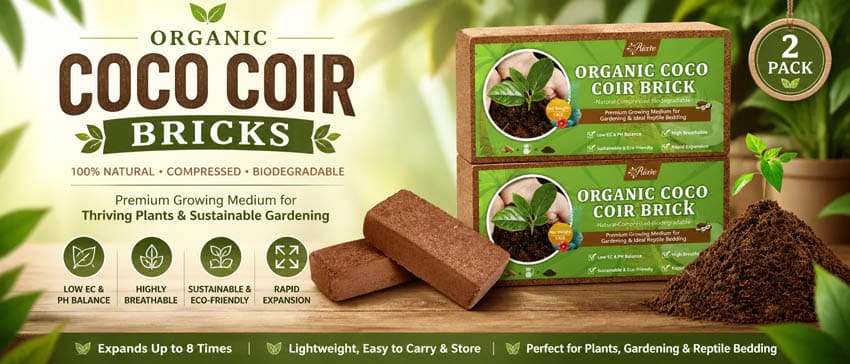
It can feel tempting to scoop soil directly from the yard into a container garden, especially when filling large pots becomes expensive.
Unfortunately, traditional garden soil usually performs poorly inside containers.
Garden soil tends to compact heavily in pots, reducing airflow around roots and making it harder for water and nutrients to move properly through the container.
Compacted soil can also trap excess moisture near roots while simultaneously preventing healthy nutrient absorption.
Instead, container vegetables thrive best in lightweight potting mixes specifically designed for drainage, airflow, and moisture retention.
Healthy roots need both water and oxygen to absorb fertilizer effectively.
Overfeeding with Nitrogen
Nitrogen is wonderful for leafy growth… until it becomes too much of a good thing.
Overfeeding with high-nitrogen fertilizers often creates giant, beautiful plants that produce disappointingly small harvests.
Tomatoes become leafy jungles with few fruits. Pepper plants grow tall and green but delay flowering. Cucumbers explode into vines while slowing actual production.
A thriving vegetable garden should not just grow leaves. It should grow food.
This is why balanced feeding becomes especially important once flowering begins.
At that stage, plants need stronger support from phosphorus and potassium rather than endless nitrogen-driven foliage growth.
Forgetting Mid-Season Feeding
Many container gardens start the season beautifully, then quietly fade as summer progresses.
This often happens because the original nutrients inside the potting mix have simply been exhausted.
Container vegetables are constantly pulling nutrients from a very limited space, and heavy watering gradually washes remaining fertilizer out through drainage holes.
Without replenishing those nutrients, even healthy plants eventually slow down.
Signs Your Containers May Need Mid-Season Feeding
- Slower fruit production
- Pale or faded leaves
- Smaller vegetables than earlier harvests
- Reduced flowering
- Plants looking tired despite regular watering
A simple mid-season feeding routine can dramatically extend harvests well into late summer and early fall.
Ignoring Watering Consistency
Fertilizer and watering are deeply connected in container gardening.
Even the best fertilizer for container vegetables cannot work properly if watering remains inconsistent.
When soil repeatedly swings between bone dry and soaking wet, roots struggle to absorb nutrients efficiently. This stress can contribute to blossom end rot, weak growth, bitter cucumbers, cracked tomatoes, and poor fruit production overall.
Consistent moisture helps nutrients move steadily through the root zone where plants can actually use them.
This is one reason self-watering systems and mulching can make such a noticeable difference in container gardens during hot weather.
If you want to avoid some of the most common problems gardeners face, our guide to
container gardening mistakes that hurt harvests dives deeper into troubleshooting stressed plants and struggling containers.
Organic vs Synthetic Fertilizer for Vegetable Containers
One of the biggest debates in gardening circles is whether organic or synthetic fertilizers are “better.”
The truth is that both can work well in container gardens when used thoughtfully.
Most gardeners eventually develop their own preferred approach based on their growing style, budget, gardening goals, and the amount of time they want to spend maintaining containers.
Rather than viewing one option as completely right or wrong, it often helps to understand the strengths and limitations of each.
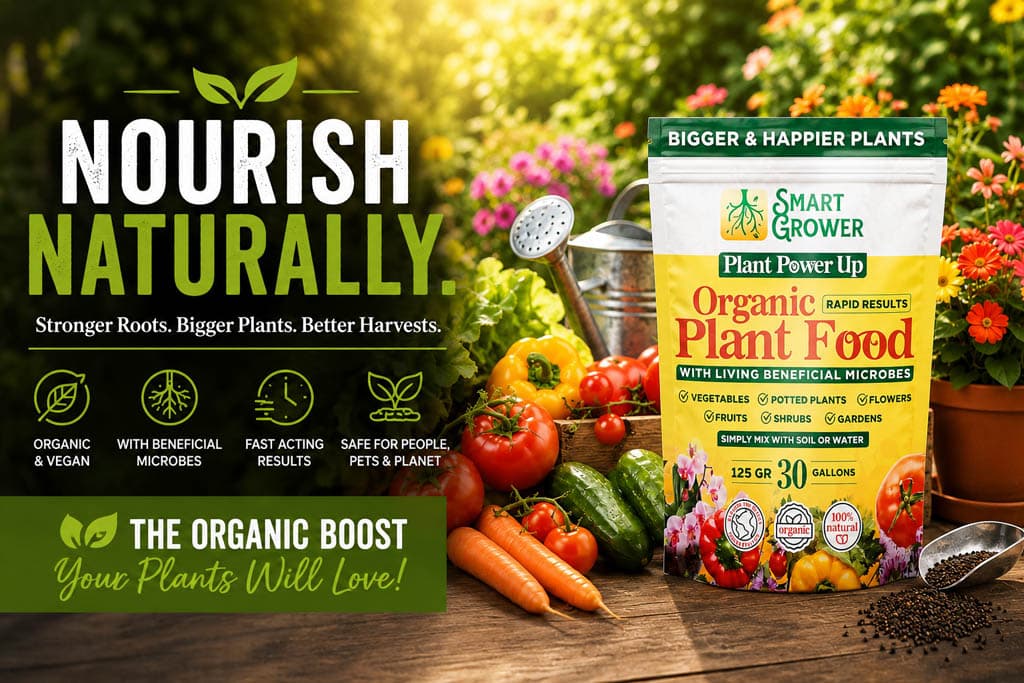
Organic Fertilizers
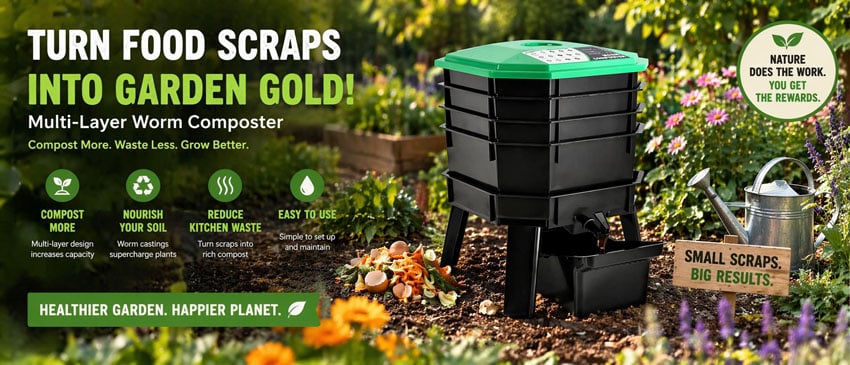
Organic fertilizers are made from natural materials such as composted manure, bone meal, kelp, fish emulsion, alfalfa meal, and worm castings.
These fertilizers tend to release nutrients more slowly over time as soil microbes break them down.
Many gardeners appreciate organic fertilizer for vegetables because it not only feeds plants but also helps improve the overall health of the soil itself.
Benefits of Organic Fertilizers
- Improves long-term soil structure
- Supports beneficial microbial life
- Usually gentler on roots
- Slower, steadier nutrient release
- Lower risk of fertilizer burn when used properly
Organic fertilizers often work beautifully in living soil systems where gardeners want to build healthier containers over time rather than simply feeding plants short term.
They can also pair especially well with sustainable gardening methods like no-dig gardening practices that focus on soil health and ecosystem balance.
Synthetic Fertilizers
Synthetic fertilizers are manufactured to deliver precise amounts of nutrients directly to plants.
Because nutrients are immediately available, synthetic fertilizers often produce faster visible results, especially when plants are actively growing or showing nutrient deficiencies.
They can be especially useful for quickly correcting deficiencies in heavily producing container vegetables.
Overusing synthetic fertilizers may increase the risk of root burn, salt buildup, excessive leafy growth, and nutrient imbalance if feeding schedules become too aggressive.
For this reason, many gardeners choose to use diluted applications more frequently rather than applying large amounts all at once.
Which Is Better for Container Gardens?
For many gardeners, the best approach ends up somewhere in the middle.
Some prefer building rich organic soil with compost and worm castings while supplementing with occasional liquid fertilizer during peak harvest season.
Others appreciate the precision and convenience of synthetic fertilizers for fast-growing vegetables in demanding summer conditions.
What matters most is consistency, observation, and learning how your plants respond over time.
Healthy gardens are rarely created through perfection. They grow through observation, adjustment, and steady care season after season.
No matter which path you choose, the goal remains the same: healthy soil, resilient plants, and abundant harvests growing even in the smallest spaces.
Understanding NPK Fertilizer Numbers for Container Vegetables
If you have ever picked up a bag of fertilizer and stared at numbers like 10-10-10 or 5-3-4 wondering whether you accidentally wandered into a math class instead of a garden center… you are definitely not alone.
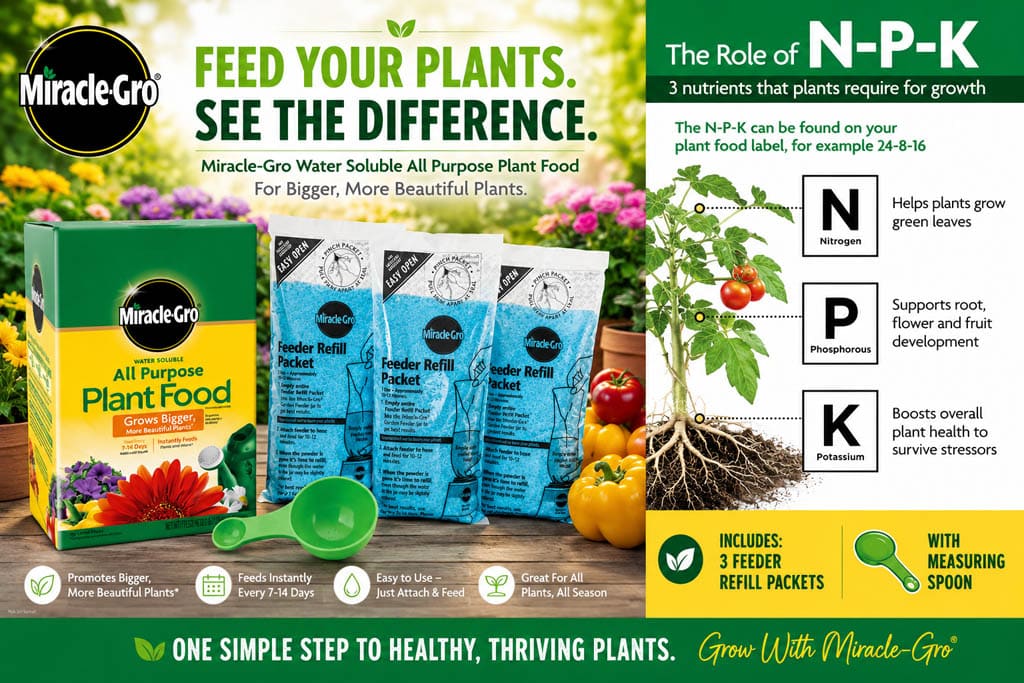
Those three numbers are called the NPK ratio, and they tell you the balance of nutrients inside the fertilizer.
Understanding what those numbers mean can make feeding container vegetables much less confusing and help you choose the right fertilizer for different stages of growth.
What Does NPK Stand For?
- N = Nitrogen → supports leafy green growth
- P = Phosphorus → supports roots, flowers, and fruit production
- K = Potassium → supports overall plant strength and disease resistance
The numbers themselves represent the percentage of each nutrient inside the fertilizer blend.
For example:
- 10-10-10 contains equal parts nitrogen, phosphorus, and potassium
- 5-10-10 contains lower nitrogen but higher phosphorus and potassium
- 20-5-10 is heavily focused on leafy growth
What Nitrogen Does for Vegetable Plants
Nitrogen fuels leafy green growth and helps plants produce chlorophyll, which powers photosynthesis.
Young vegetable plants usually need more nitrogen early in the season while they are developing stems and foliage.
However, too much nitrogen later in the season can create enormous leafy plants with surprisingly few vegetables.
Why Phosphorus Matters for Flowers and Harvests
Phosphorus becomes especially important once vegetable plants begin flowering.
It supports:
- Root development
- Flower production
- Fruit formation
- Overall plant energy transfer
Container vegetables like tomatoes, peppers, cucumbers, and squash often benefit from slightly higher phosphorus during heavy flowering and fruiting periods.
The Role of Potassium in Plant Health
Potassium helps regulate water movement, strengthens plant tissues, and supports resilience against stress, disease, and extreme temperatures.
In container gardens, potassium becomes especially valuable during summer heat when plants are dealing with rapid growth and frequent watering.
Strong potassium levels can help improve:
- Fruit quality
- Plant vigor
- Drought tolerance
- Disease resistance
- Overall harvest production
What NPK Ratio Is Best for Container Vegetables?
There is no single “perfect” fertilizer ratio for every vegetable or every stage of growth.
But for many beginner container gardens, a balanced fertilizer works beautifully as a starting point.
Simple NPK Guidelines for Container Gardens
- Balanced growth: 10-10-10 or 5-5-5
- Leafy early growth: slightly higher nitrogen
- Flowering and fruiting: slightly higher phosphorus and potassium
- Herbs and leafy greens: moderate nitrogen works well
Many gardeners use a balanced fertilizer early in the season, then switch to a bloom-supporting fertilizer once tomatoes, peppers, and cucumbers begin flowering heavily.
Fertilizer numbers are not secret garden codes. They are simply clues helping you understand what your plants are being fed.
As you gain experience, choosing fertilizer becomes less about memorizing numbers and more about observing how your plants respond throughout the season.
Easy Beginner Fertilizing Routine for a Thriving Container Garden
If fertilizing still feels a little overwhelming, take a deep breath and remember this:
Your plants do not need perfection.
They simply need consistent care, steady nourishment, and a gardener willing to pay attention along the way.
One of the biggest myths in gardening is that successful harvests come from complicated schedules and expensive products. In reality, healthy container gardens are often built through simple routines repeated consistently over time.
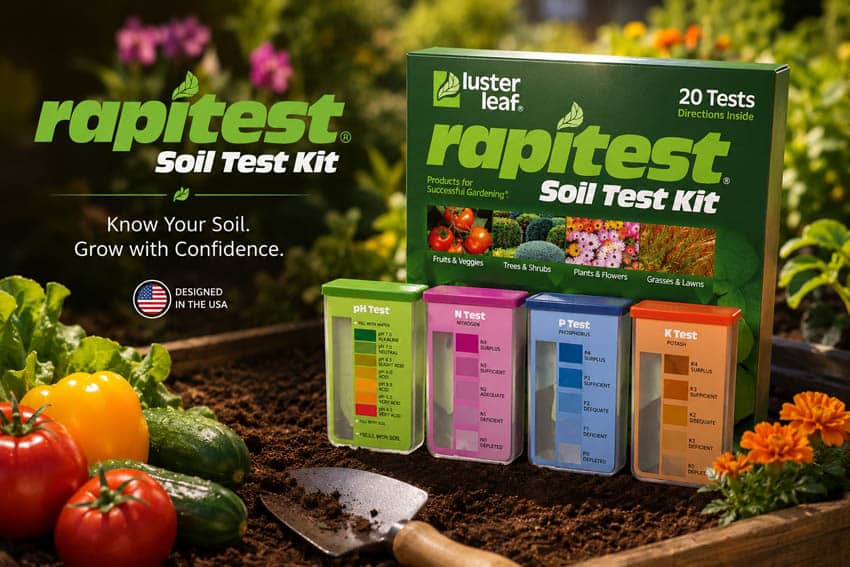
If you are just getting started, this beginner-friendly fertilizing routine can help you grow healthier vegetables without feeling buried under complicated feeding charts and fertilizer math.
Simple Container Garden Fertilizing Routine
- Start with a quality potting mix
Use a lightweight container mix designed for vegetables rather than heavy garden soil. - Add slow-release fertilizer at planting time
This creates a steady nutritional foundation for early growth. - Feed with liquid fertilizer every 2 weeks
Especially during flowering and fruit production in summer. - Water consistently
Healthy watering habits help roots absorb nutrients properly. - Watch your plants closely
Leaves, flowers, growth speed, and fruit production all provide clues about what your garden needs.
This kind of routine creates balance instead of extremes.
Rather than flooding plants with heavy fertilizer all at once, you are building a steady rhythm of nourishment that supports healthy growth throughout the season.
Over time, you will begin noticing subtle signals from your garden almost instinctively. You will recognize when leaves appear pale, when flowering slows down, or when plants seem especially thirsty during heat waves.
That awareness is part of what makes gardening feel so grounding.
The healthiest gardens are not controlled with perfection. They are guided through observation, patience, and steady care.
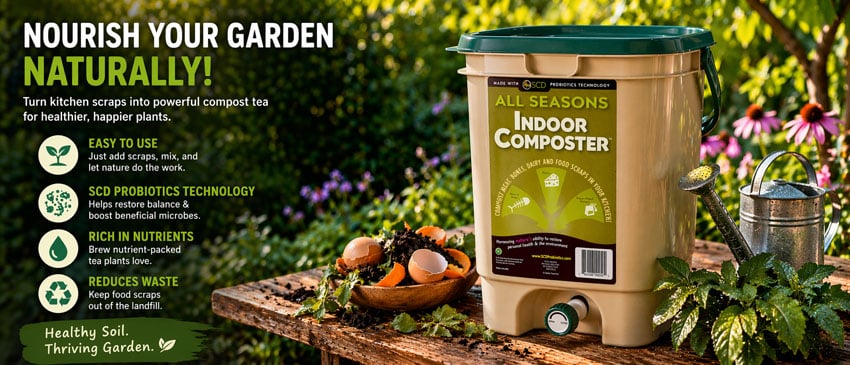
As your confidence grows, you can experiment with compost teas, worm castings, homemade amendments, and different organic fertilizer blends to discover what works best for your growing space.
And remember, even experienced gardeners adjust their routines constantly depending on weather, container size, crop variety, and seasonal conditions.
Gardening is always part science, part intuition, and part learning as you grow.
Final Thoughts
Container gardening has a beautiful way of teaching us that abundance does not depend on having endless space.
A small balcony, a sunny patio, or a handful of containers near the kitchen door can still produce baskets of tomatoes, armfuls of herbs, crunchy cucumbers, and vibrant peppers when those plants are given the nourishment they need.
Learning how to properly fertilize container vegetables is really about understanding the relationship between soil, water, sunlight, and steady care.
When nutrients fade, plants struggle quietly. But when the soil is replenished consistently, container gardens often surprise us with just how productive they can become.
The process does not need to be complicated.
Start simple. Watch your plants closely. Adjust gradually. Feed consistently. Trust yourself enough to learn alongside your garden.
Even the smallest container garden can overflow with life when the soil beneath it is cared for well.
With patience, observation, and a little nourishment along the way, your tiny growing space can become far more abundant than you ever imagined.
Frequently Asked Questions About Fertilizing Container Vegetables
Can You Overfertilize Container Vegetables?
Yes. Overfertilizing container vegetables can damage roots, reduce fruit production, and create salt buildup inside containers.
Too much fertilizer often causes excessive leafy growth while slowing flowers and harvests. Following a consistent, moderate feeding schedule usually creates healthier long-term results than heavy applications.
What Is the Best Fertilizer for Tomatoes in Pots?
The best fertilizer for tomatoes in pots is usually a balanced fertilizer early in the season followed by one slightly higher in phosphorus and potassium once flowering begins.
Tomatoes also benefit from calcium support and consistent watering to help prevent blossom end rot.
If you want more tomato-growing tips, visit our guide to growing high-yield tomatoes in containers.
How Often Should I Fertilize Container Plants?
Most container vegetables benefit from slow-release fertilizer every month and liquid feeding every 1 to 2 weeks during active summer growth.
Heavy-feeding crops like tomatoes, cucumbers, and peppers may require more frequent feeding during peak harvest season.
Is Compost Enough for Container Vegetables?
Compost is excellent for improving soil health, moisture retention, and microbial activity, but it is not always enough to fully support heavy-feeding vegetables in containers by itself.
Most container gardens perform best when compost is combined with an additional balanced fertilizer source.
Are Coffee Grounds Good for Container Gardens?
Coffee grounds can benefit container gardens when used in moderation. They may help improve soil texture and add small amounts of nitrogen as they break down.
However, adding excessive coffee grounds directly to containers can sometimes compact soil or interfere with drainage.
If you want to learn how to use them safely, explore our full guide on coffee grounds in vegetable gardens.